Our Church History
The Early Years
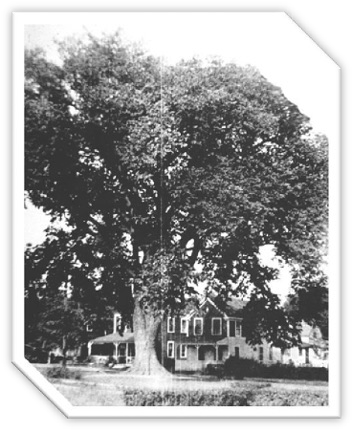
The story of Houghs Neck Congregational Church began in the early 1880s, when summer residents gathered for nondenominational worship in cottages and beneath a large elm tree on Centre Road, now Macy Street.
In 1884, the Houghs Neck Union Christian Association purchased a lot on Bay View Avenue after raising $100 for the property.
By 1893, summer worship services were being organized by the Christian Endeavor Society of Bethany Congregational Church, with ministers from several denominations participating.
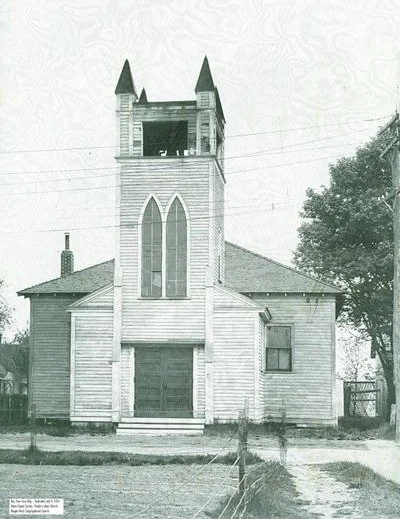
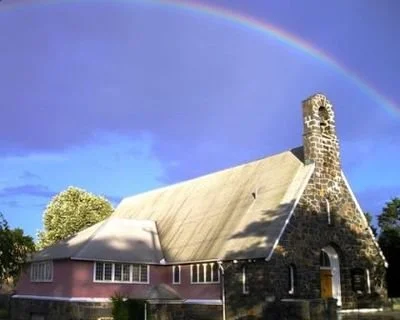
Through offerings and fundraising, the community raised enough money to build the People’s Union Chapel at 64 Bay View Avenue. It was dedicated on July 8, 1894. At first, worship services were held only during July and August.
In 1908, Rev. Charles R. McMeeken became the church’s first regular pastor. As the congregation grew, a kitchen was added in 1911, a bell and tower in 1913, and new pews in 1914.
On May 25, 1911, the congregation reorganized as The People’s Union Church, proudly known as “The Little Church with the Big Welcome.” By 1917, a larger home was needed. Two lots on Manet Avenue were purchased for a new church and parsonage. The congregation became associated with the Congregational Conference in Boston in 1919, and the parsonage at 300 Manet Avenue was completed in 1921.
A Second Congregation
Meanwhile, another Congregational community was forming in Houghs Neck.
On October 1, 1922, a group of 33 people gathered for worship at Mr. Wiggins’ store at the corner of Bell and Sea Streets. The following year, they formally organized as the Congregational Church of Christ, with Rev. Charles Clark as pastor.
A church was built at the corner of Sea and Ratchford Streets in 1924.
In 1928, the two congregations united to form Houghs Neck Congregational Church.
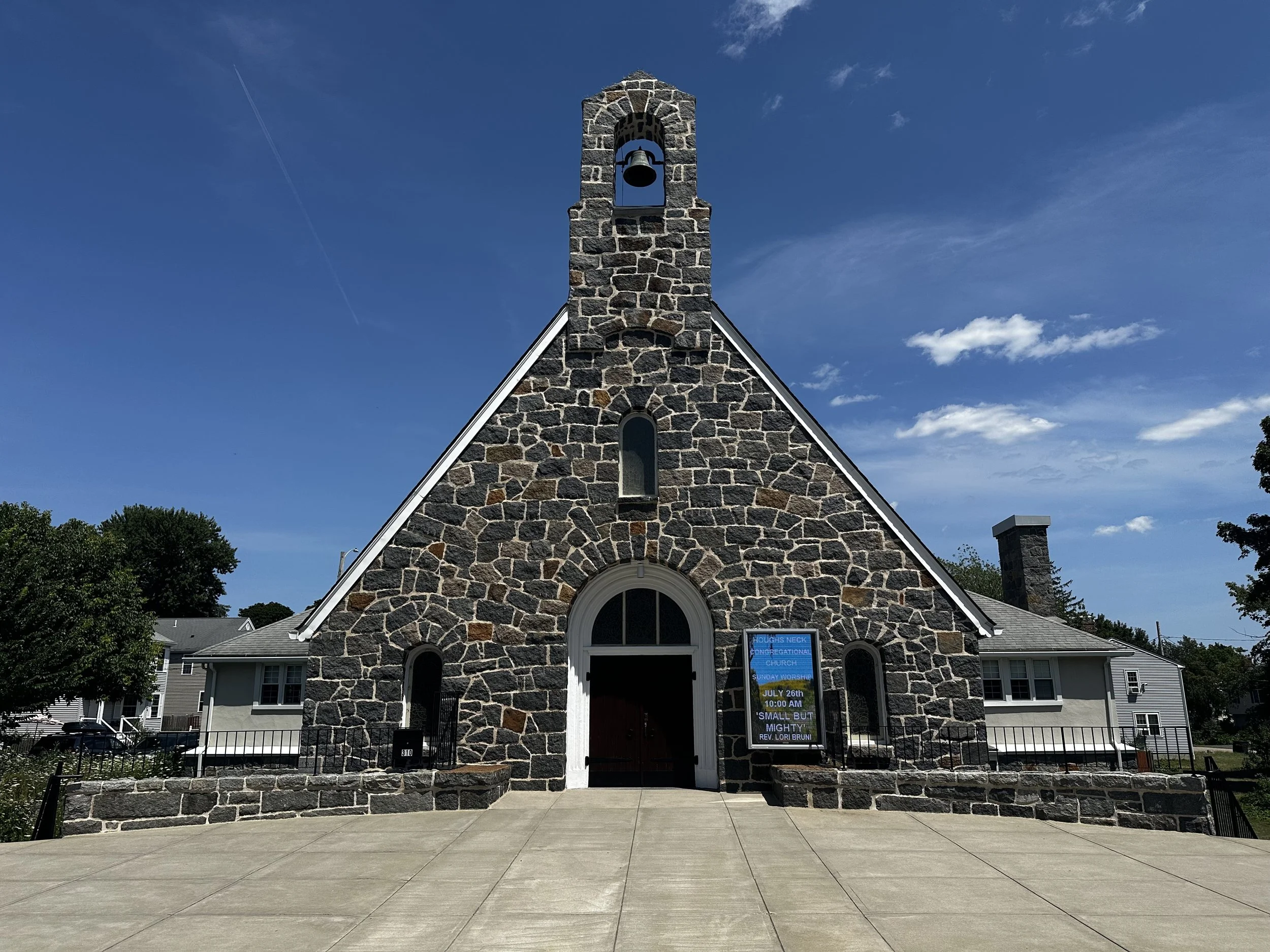
With assistance from the Massachusetts Home Missionary Society, plans soon began for a new church at 310 Manet Avenue.
Our Church at 310 Manet Avenue
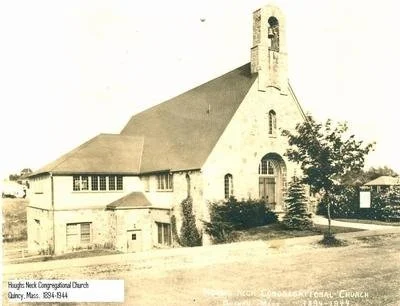
The cornerstone was laid on November 8, 1931. On Easter Sunday in April 1932, the new church was dedicated, although parts of the building were still unfinished.
Completing the church was truly a labor of love. Members donated their time, often sacrificing holidays and days off. The Women’s Society raised funds and prepared meals for the volunteers.
On October 6, 1940, the congregation held its first service in the completed sanctuary. It was formally dedicated on December 29, 1940.
Growing in Faith and Community
Rev. Peter V. Corea became pastor in 1947. Rev. M. Alicia Corea was ordained at HNCC in 1949 and also served as pastor. Rev. Robert L. Johnston served as associate pastor from 1956 to 1958.
The church continued to grow and improve. The first stained-glass window, depicting Christ as the Good Shepherd, was installed in 1952.
Over the years, an electronic organ was added, the upstairs north wing was completed, a new kitchen was built, and the church mortgage was paid in full.
Members continued to give generously of their time and talents. In 1966, church members built the patio and front wall. Another stained-glass window, depicting Jesus as a boy in the Temple, was dedicated in memory of Randal Coombs.
In 1972, the congregation celebrated Rev. Peter and Rev. M. Alicia Corea’s 25th anniversary at HNCC. The balcony stained-glass window, “Immortal Love, Forever Full,” was dedicated in their honor.
Reflecting on the church’s history and future, Mrs. Corea wrote:
“Our past is illuminative, our future is challenging, and the work and worship of the Houghs Neck Congregational Church are dedicated to the glory of God and the memory of all those who have done their work and gone before us.”
A Continuing Legacy
The history of Houghs Neck Congregational Church is a story of faith, vision, commitment, sacrifice, and people.
From summer worshippers gathering beneath an elm tree to the church family that worships together today, generations have shared their time, talents, resources, and love to build and sustain this community.
In the 1981 Annual Report, Rev. Dr. Peter V. Corea wrote:
“The vision, the commitment, the sacrifice, and the devotion of the people of the Church are outstanding.”
More than a century later, those qualities remain an important part of who we are today.